
 Why invest in Greece
 Why invest in Athens
 FAQ
FAQ Apartment Prices in Athens: 2025 Review
 Mortgage in Greece 2025: A Comprehensive Guide to Obtaining Real Estate Financing in Greece
 Golden Visa Greece: The Complete Guide to Obtaining a Golden Visa in Greece



Leave your email and we will get back to you.
Plaka is located in the historic heart of Athens, right at the foot of the Acropolis. It is one of the oldest and most famous neighborhoods in the city, featuring narrow cobblestone alleys, neoclassical houses, and meticulously preserved architectural charm. The area attracts visitors from around the world throughout the year, serving as a primary cultural, aesthetic, and touristic hub.
Plaka represents a neighborhood with a distinct identity—an atmosphere unlike any other district in Athens. The neighborhood offers a unique living experience in the very heart of the city, with views of Greek history from almost every window. The alleys are relatively quiet yet full of life, with a precise blend of tourism, culture, and small-scale local commerce.
In terms of character—this is a highly touristic and aesthetic area with a strong cultural presence. It is primarily suited for those seeking investments based on international tourism or exceptional luxury apartments. It is less suitable for the daily living needs of local families, but ideal for boutique apartments, short-term rentals, or anyone looking for a truly unique property.
The Population
The human fabric of Plaka differs significantly from classic residential neighborhoods in Athens. It is an area with a strong international presence, small-scale business activity, and a limited local community that is gradually diminishing. Today, the population consists of several primary groups:
A high concentration of tourists, expats, and foreign investors.
A minority of local residents – mostly long-standing inhabitants or owners of inherited properties.
A presence of small business owners (boutique shops, galleries, and family-run restaurants).
Low market turnover – a high percentage of properties remain under private ownership for many years.
Relatively high income levels among property owners, with a tendency toward long-term holding rather than selling.
Transportation
Plaka is located in the historic heart of Athens; therefore, access is convenient but comes with clear physical limitations. The neighborhood is characterized by narrow alleys and pedestrian zones, with public transport available in the surrounding areas:
Nearest Metro Station: Monastiraki (Green and Blue lines), within a 5–10 minute walk.
Syntagma Station is also accessible by foot and connects to major city lines.
Bus lines operate along the main streets adjacent to Plaka – but do not enter the neighborhood itself.
The neighborhood is designed primarily for pedestrian movement – making it ideal for those who value walking in an aesthetic urban environment.
Key Locations and Main Streets
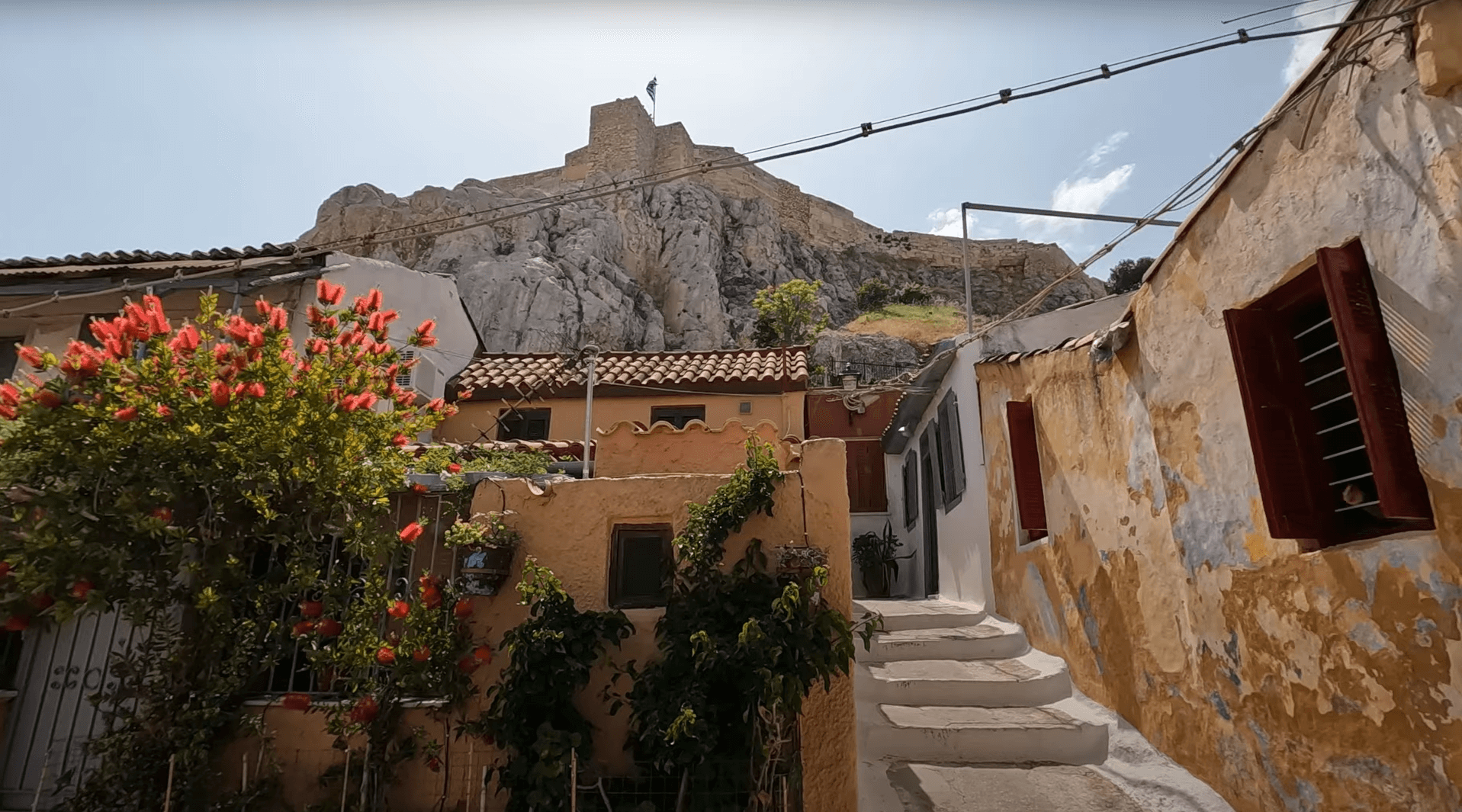
Plaka does not have a “main street” in the classical sense, but rather a network of narrow, cobblestone alleys that crisscross a vibrant historic district. The neighborhood experience is defined by walking through it, rather than by a central traffic artery.
Adrianou and Kidathineon Streets serve as the primary tourist axes, lined with galleries, boutique shops, restaurants, and cafes.
Small museums, Byzantine churches, and archaeological sites are scattered throughout the neighborhood.
Direct pedestrian access to the Acropolis and the Acropolis Museum.
Quieter inner streets – such as Epimenidou – offer a pleasant residential atmosphere with a classic architectural touch.
Anafiotika – a small scenic area within Plaka with white-washed houses reminiscent of the Cycladic islands.
The Acropolis Museum – a breathtaking cultural center housing rare artifacts.
The Roman Agora and the Ancient Greek Agora – archaeological remains in the heart of the neighborhood.
Cine Paris – an open-air cinema with a direct view of the Acropolis.
Insider Tip – Beta Real Estate: On Sundays, many of the sites offer free admission – an excellent way to experience the area as part of an investment review.
History, Architecture, and Charm
As the oldest neighborhood in Athens, Plaka’s history is documented as far back as the Classical period. Having served as a cultural and spiritual hub since antiquity, the area perfectly preserves its timeless character through:
Neoclassical stone residences featuring traditional blue shutters.
Byzantine churches dating back to the 11th and 12th centuries.
Picturesque alleys connected by iconic steep stairways.
Insider Tip – Beta Real Estate: We see strong investor interest in smaller units, such as studios and 1-2 bedroom apartments, driven by the exceptional demand for short-term and vacation rentals in the area.
Authentic Culinary Scene
Plaka is a true haven for lovers of Greek cuisine:
Traditional Tavernas featuring live music and local atmosphere.
Balkan-style bakeries serving fresh, warm baklava.
Rooftop cafes offering open-air seating with direct views of the Acropolis.
Recommended Dining
- Yiasemi – A charming cafe-bistro set on iconic flower-lined steps.
- Scholarhio – A family-run taverna specializing in traditional Greek tapas menus.
- Ta Giouvetsakia – Authentic home-cooked meals at affordable prices.
- Insider Tip – Beta Real Estate: Investors purchasing short-term rental properties in Plaka can recommend these spots to their guests; data shows that providing local recommendations significantly boosts guest satisfaction and Airbnb ratings.
Shopping and Culture
- The neighborhood is filled with small galleries, handicraft boutiques, local jewelers, and ceramic workshops. You won’t find shopping malls here—instead, Plaka offers an authentic shopping experience:
- Character-filled souvenir shops.
- Contemporary Greek art galleries.
- Antique stores featuring vintage books, coins, and vinyl records.
Real Estate in Plaka
The real estate market in Plaka is unique—as a designated preservation area, supply is extremely limited. Property prices are among the highest in the city, with demand driven primarily by foreign investors and buyers seeking one-of-a-kind, unconventional assets.
In recent years, the sales market has seen an upward trend of 4%–7%. However, property renovations and usage are subject to strict regulations to maintain the neighborhood’s historic character. In the rental market—specifically short-term rentals—demand remains steady, peaking during high tourist seasons.
Despite the restrictions, Plaka offers exceptional real estate potential:
Many properties are optimized for short-term tourist rentals.
The views, atmosphere, and proximity to major landmarks make it a highly sought-after destination.
Strategic investments often involve the restoration of traditional apartments for high-yield rentals.
Insider Tip – Beta Real Estate: Be mindful of preservation restrictions—many buildings are subject to heritage laws. Any renovation planning requires special municipal permits and approvals.
Key Advantages for Investors
Public Transportation: Proximity to major Metro stations (Monastiraki, Syntagma) provides easy access to the airport and other key areas of the city.
High Tourism Demand: The neighborhood attracts visitors year-round—a significant advantage for properties intended for short-term rentals (Airbnb).
Real Estate Scarcity: Limited property inventory and strict regulations mean every asset in Plaka is unique, with built-in added value.
Historic Urban Fabric: One of the most well-maintained and impressive areas in the city, offering high aesthetic appeal and a “Classical Athens” atmosphere.
Critical Insights for Investors
Short-Term Rental Eligibility: It is essential to verify the specific eligibility for tourist rental registration, as not every apartment is suitable for Airbnb use.
Preservation Regulations: Property renovations often require approval from the municipal conservation board—a process that can be time-consuming.
Location Strategy: Quiet inner streets are preferable for investors seeking high-end, luxury short-term rental assets.
Acropolis Views: Properties with a view of the Acropolis are rare and highly sought after; these opportunities often trade off-market and are not listed publicly.
