
 Why invest in Greece
 Why invest in Athens
 FAQ
FAQ Apartment Prices in Athens: 2025 Review
 Mortgage in Greece 2025: A Comprehensive Guide to Obtaining Real Estate Financing in Greece
 Golden Visa Greece: The Complete Guide to Obtaining a Golden Visa in Greece



Leave your email and we will get back to you.
The Vyronas neighborhood is located in southeastern Athens, approximately a 15-minute drive from the city center. Bordering popular areas such as Pangrati, Kaisariani, and Hymettus, it is a quiet residential district with a distinct local character. Established in the 1930s by Greek refugees from Asia Minor, the neighborhood has maintained its authentic, family-oriented, and traditional feel despite the surrounding urban development.
Vyronas is a neighborhood for everyday living rather than a tourist hub. Its streets are well-kept—some narrow and traditional in style—offering a blend of older buildings and modern apartments constructed over the last decade. This neighborhood is particularly well-suited for those seeking long-term investment properties or rentals geared toward families and students.
The Population
The population in Vyronas is diverse yet established—mostly local, with a strong sense of community and an urban environment that primarily caters to Athenians. It is characterized by a neighborhood feel rather than a tourist atmosphere.
Middle-class Greek families: A high percentage of the residents are local families.
Young professionals and students: Many choose to live in the neighborhood due to its proximity to universities and convenient access to public transportation.
Low tourist presence: This contributes to a more stable and consistent long-term rental market.
Locally-owned small businesses: The area is filled with family-run shops, bakeries, restaurants, and cafes.
Transportation
While Vyronas does not have its own Metro station within the neighborhood, it enjoys excellent accessibility thanks to its proximity to major traffic arteries and an extensive bus network. The neighborhood is well-connected to surrounding districts and the city center.
Frequent bus lines: Direct routes to central Athens (Syntagma) operate at high frequency.
Convenient for car owners: Parking is generally available, especially in the upper parts of the neighborhood.
Nearest Metro station: Evangelismos – located just a short bus ride away.
Walkability: Many inner streets are designed for comfortable foot traffic, featuring shaded sidewalks and small public gardens.
Key Locations and Main Street
The neighborhood’s main artery is Leoforos Vyronos (Vyronas Avenue), which is lined with local shops, cafes, medical centers, kindergartens, and public institutions.
Anagnostopoulou Park: A central “green lung” that is ideal for families and outdoor activities.
Vyronas Amphitheater (Theatro Vrachon): A cultural landmark that hosts major concerts and performances throughout the summer months.
Community Center: Offers various activities, classes, and social gatherings for local residents.
Local Market (Laiki Agora): A vibrant weekly market that attracts residents from Vyronas
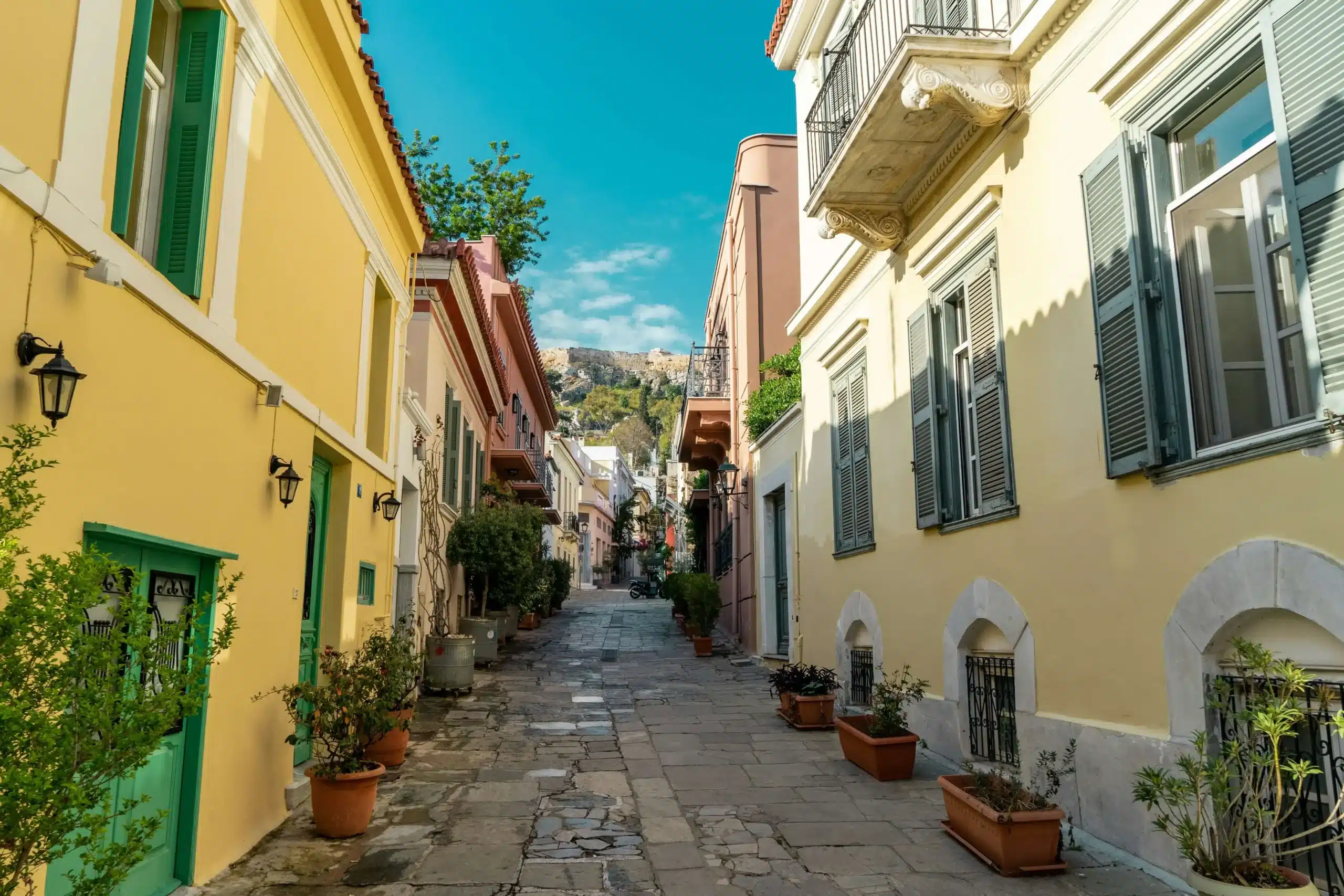
Real Estate in Vyronas – Athens, Greece
The real estate market in Vyronas is considered stable, showing moderate appreciation over the past few years. While prices remain affordable compared to neighboring districts like Pangrati, current trends indicate rising demand from both local and foreign investors.
Steady Growth: An average price appreciation of 3%–5% per year.
Stable Rental Market: Driven by long-term tenants, resulting in lower volatility and minimal turnover.
Appreciation Potential: Significant upside potential in the northern areas bordering Hymettus Park.
Key Advantages for Investors
Affordability: Competitive pricing relative to neighboring central districts.
Stable Long-Term Rental Demand: Supported by a local population with zero dependency on tourism.
Excellent Accessibility: Well-served by an extensive bus network and highly convenient for private vehicle owners.
Steady Value Appreciation: Consistent growth potential driven by new development projects on the neighborhood’s periphery.
Critical Insights for Investors
Building Condition: Older structures should be thoroughly inspected; some may require structural reinforcement or renovation.
Location Strategy: The lower parts of the neighborhood are more densely populated; focusing on the upper elevations is often preferable.
Demand Drivers: Properties with easy access to bus lines or proximity to parks are in higher demand and command better value.
Investment Profile: Not suitable for short-term rentals (Airbnb)—however, it is an ideal choice for long-term investment offering stable yields.
