 Why invest in Greece
 Why invest in Athens
 FAQ
FAQ Apartment Prices in Athens: 2025 Review
 Mortgage in Greece 2025: A Comprehensive Guide to Obtaining Real Estate Financing in Greece
 Golden Visa Greece: The Complete Guide to Obtaining a Golden Visa in Greece



Athens, the capital of Greece, is an ancient city rich in history, culture, and a vibrant modern lifestyle. Beyond being a major tourist destination, Athens has also become a hotspot for real estate investment, attracting international investors seeking opportunities in a growing market. With a relatively stable economy, attractive property prices, and steadily rising demand for real estate, Athens is emerging as an appealing investment destination for those looking to diversify their portfolios. In this article, we explore why Athens is a worthwhile real estate investment destination and what makes it attractive to both local and international investors.
Greece’s real estate sector, historically considered a safe investment due to high homeownership rates and strong ties to tourism, suffered a sharp downturn following the 2008 financial crisis, with prices reaching historic lows at the height of the crisis in 2014. In 2018, the long-awaited recovery began, driven by several factors—most notably renewed investor confidence in the country’s ability to recover. These factors include investor-friendly tax policies (a growth engine that has proven to be particularly significant) and the Greek Golden Visa program, which grants residency permits to non-EU citizens who invest in real estate. All of these initiatives, along with others introduced by the local government, led to a massive inflow of foreign capital into the real estate market, especially in Athens, the country’s primary tourism destination. To put this into perspective, the steady growth the industry experienced over the past five years culminated in investment volumes of €1.7 billion in 2022—an increase of approximately 60% compared to the previous year.
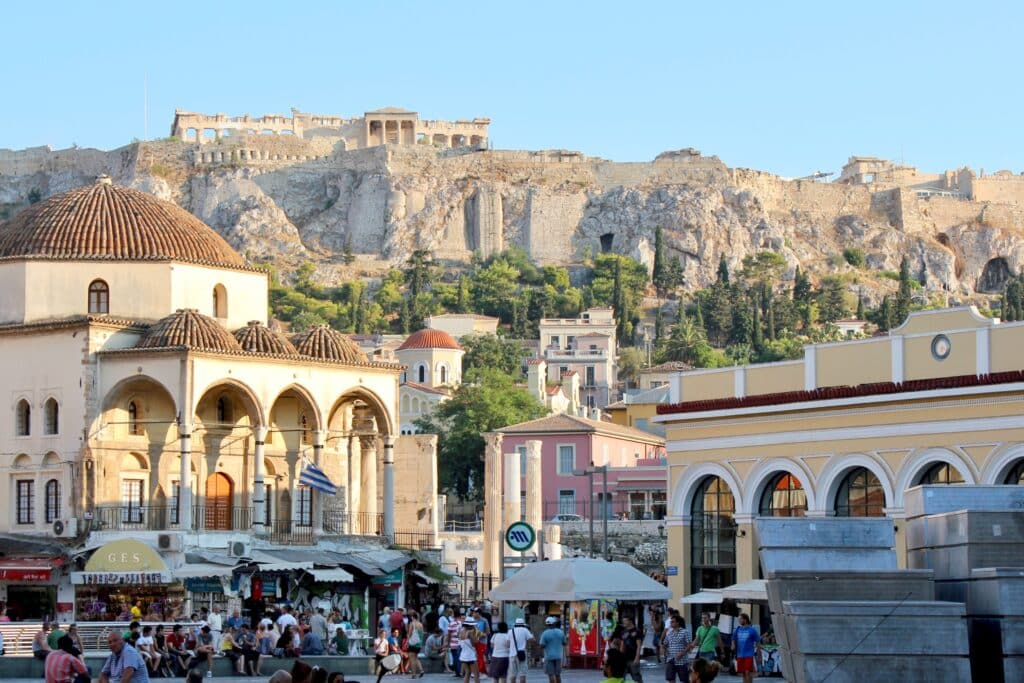
As a result, Athens’ real estate sector has grown significantly in value, with some neighborhoods recording annual growth rates approaching 20%. This growth is especially pronounced in popular areas such as Kolonaki and the Athens Riviera, which have developed into major investment hubs. With this trend expected to continue, Athens is becoming increasingly popular among foreign investors seeking to benefit from the city’s income-generating real estate market. It is also worth noting that despite the COVID-19 pandemic, Greek housing prices remained stable and real estate investment actually increased—further boosting interest in Athens and signaling to foreign investors that Greece is a reliable investment destination.
Therefore, when discussing investment destinations, it is important to compare Athens with other popular European markets. Today, Athens is the most affordable capital city in Europe. Compared with peers such as Porto or Berlin, apartment prices in Athens can be as low as half the cost found in those cities. It is thus clear why Athens is considered one of the most compelling investment opportunities available. Combine these price advantages with strengths in tourism, a growing economy, and an aggressive policy to attract foreign investment, and it becomes evident why Athens is a smart choice for those seeking real estate opportunities with relatively low entry costs and strong long-term growth potential.
After everything discussed so far, here is a statistic that highlights the true potential of the Greek capital for those who know how to spot opportunities early: even after four consecutive years of growth, the Bank of Greece reports that the residential property price index is still about 28% below its 2008 levels—unlike nearly every other market in Europe and worldwide. It is therefore no surprise that, according to several experts and international advisory firms such as Deloitte and EY, Athens is being branded as one of the world’s most sought-after investment destinations, with value increases expected to rise by tens of percentage points in the coming years.
Another important factor to consider is financing. Only in recent months has Greece’s mortgage market begun to revive. Understanding the implications of this phase is crucial: a real estate market on a positive growth trajectory—such as Athens—that has not yet been fully leveraged by widespread financing can represent a unique investment opportunity. Such an economic environment virtually guarantees that demand will rise significantly as lending continues to expand, which in turn supports ongoing price appreciation. While investing in a market with limited financing options requires more upfront capital, it also signals a less saturated market with the potential for higher returns. By contrast, investing in markets where financing is readily available and easy to obtain (Portugal, for example) should account for the real possibility that property prices are artificially inflated, potentially leading to a real estate bubble. Although markets with limited financing can present certain challenges, they simultaneously offer investors a safer way to capitalize on a growing market and acquire property at reasonable prices with clear growth prospects.
Some may argue that it might be wiser to leave money in the bank, especially when interest rates are currently high. While holding funds in a bank can indeed provide a low-risk option, real estate investment offers distinct advantages that should not be overlooked. One of the primary benefits of investing in property is the potential for long-term appreciation. Whereas savings account yields are typically modest and volatile, property values tend to rise over time, making real estate a sound long-term investment. Moreover, property ownership creates the opportunity to generate rental income, providing steady cash flow as well as protection against inflation through rising asset values. In short, real estate investment can diversify a portfolio, reduce overall risk, and provide a tangible asset that can be leveraged for additional investment opportunities.
Another concern is that investing in a country whose economy relies heavily on traditional industries such as tourism may be risky. This view has merit; however, according to the International Trade Administration (ITA) of the U.S. government, Greece is in the midst of a comprehensive digital transformation. The essence of this process is Greece’s ambition to fully digitize the country by 2025 through the Information and Communication Technology (ICT) sector. The pace of this transformation was accelerated by the pandemic, during which Greece was among the first countries to launch a digital vaccination certificate and appointment platform. Major U.S. companies—including Microsoft, IBM, Digital Realty, Amazon, and Cisco—have announced their support through substantial investments. Greece’s ICT market was valued at $7.203 billion in 2021, a 3.5% increase year over year, and in 2022 the technology sector expanded further to $8.58 billion. Another key driver is the rollout of 5G technology, expected to act as a catalyst for the entire telecommunications market from 2022 onward.
In conclusion, Athens offers a highly promising real estate investment opportunity for both local and international investors. Rich in history, culture, and modern lifestyle, Athens is not only a popular tourist destination but also a rapidly growing real estate investment market. A stable economy, favorable tax policies, the gradual reopening of the mortgage market, a comprehensive technological transformation, and rising demand from foreign investors position the Greek capital as one of the most attractive investment destinations. Compared with other popular European markets, Athens stands out for its lower price per square meter and strong long-term growth potential. Together, these factors present a compelling opportunity to invest in a market that offers tangible, leverageable assets with inevitable value appreciation.